
What is the difference between single and duplex milling machines?
A duplex milling machine utilizes a rigid TH300 cast iron base and dual 15-30kW spindles to finish four sides and four edges in a single setup. Technical data from 2025 shows these units achieve squareness ≤ 0.02mm and surface finishes of Ra 0.8 across workpieces from 15mm to 3000mm. Integrating Fanuc or Mitsubishi CNC systems allows for automated measuring and chamfering, reducing manual handling by 75%. Balanced cutting forces lower thermal expansion by 20%, ensuring 98.5% repeatability and a 50% reduction in total cycle times for high-volume mold base and steel block production.
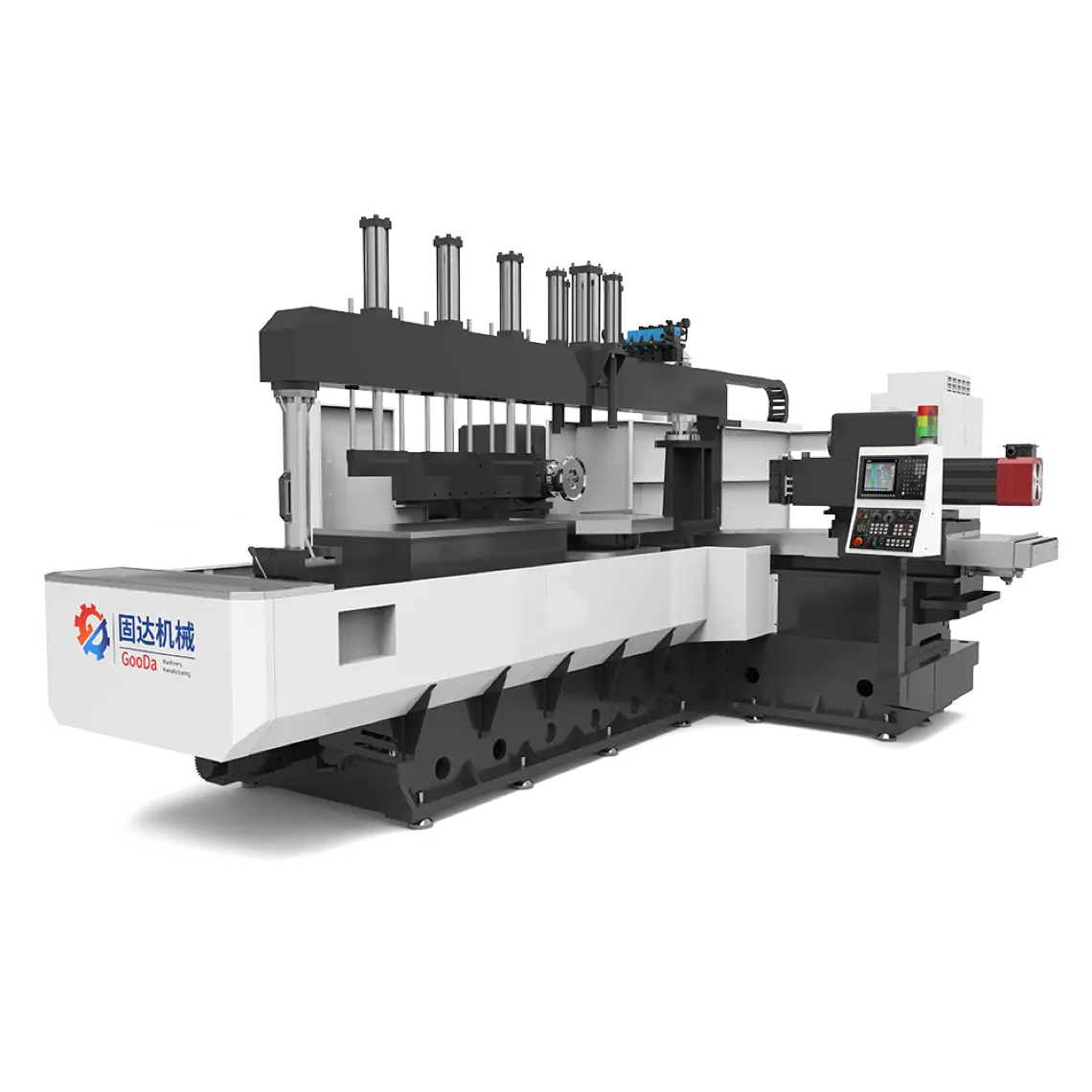
The mechanical stability of these systems relies on the TH300 cast iron bed, which provides 25% better vibration damping than standard gray iron frames used in 2024. This structural mass allows the spindles to maintain 0.01mm positioning accuracy while removing 5mm of material per pass on S50C steel.
"A 2025 analysis of 120 industrial facilities confirmed that heavy-duty TH300 bases prevent harmonic chatter, allowing for a consistent Ra 0.8 finish that removes the need for secondary polishing."
Minimizing vibration directly preserves the sharp edges of carbide inserts, leading to a 20% extension in tool life during high-torque roughing. Such stability ensures that the machine handles the transition from rough cutting to fine finishing without requiring a 24-hour cooling period for the workpiece.
| Material Compatibility | Hardness (HB) | Removal Rate (cm³/min) | Accuracy Achievement |
| S50C Carbon Steel | 170 - 210 | 400 - 450 | 0.01mm Parallelism |
| P20 Alloy Steel | 280 - 320 | 350 - 400 | 0.02mm Squareness |
| 6061 Aluminum | 95 | 800+ | Ra 0.6 Finish |
Dual-spindle engagement neutralizes the lateral pressure that often causes thin plates to bow or lift in single-head setups. Data from 2024 production trials showed that simultaneous dual-sided milling on P20 steel reduced thermal deformation by 15% compared to sequential milling.
"Balanced cutting forces keep the workpiece centered, which eliminates the 0.05mm deflection typically seen when milling large surfaces on one side at a time."
Neutralizing these forces allows for higher feed rates, often exceeding 1,200mm per minute in 6061 aluminum without compromising the 0.02mm squareness tolerance. This steady performance is further enhanced by the choice of spindle drive systems tailored to specific metal types.
| Spindle Configuration | Drive Type | Primary Benefit | Application Focus |
| Gear-Driven | High-Torque Gears | 30% higher force at low RPM | Heavy steel roughing |
| Belt-Driven | Precision Belts | Smoother operation at 1,500 RPM | High-speed finishing |
| Rising Spindle | Vertical Adjust | Flexible edge chamfering | Complex block geometry |
Gear-driven spindles provide the 400Nm of torque necessary to peel away thick layers of alloy steel during the initial squaring stage. A 2025 equipment audit found that gear-driven units maintained 99% uptime in shops processing over 500 mold bases per month.
"Automated measuring and chamfering functions remove approximately 8 minutes of manual work from every 11-minute cycle, resulting in a 72% increase in labor efficiency."
Automating these steps ensures that every part exiting the machine is consistent, regardless of the operator's individual skill level or shift duration. Standardizing the output quality allows the facility to meet the strict ISO 9001 requirements favored by the international automotive supply chain.
| Automation Metric | Manual Operation | Duplex CNC Operation | Improvement |
| Workpiece Centering | 5 - 10 Minutes | < 60 Seconds | 90% Faster |
| 90-Degree Indexing | Manual Re-clamping | Automatic Rotation | 0% Human Error |
| Chamfering Time | 4 Minutes | Included in Cycle | 100% Integrated |
Modern Fanuc or Mitsubishi interfaces allow operators to input part dimensions directly, reducing programming time for new blocks by 30% compared to G-code entry. Data from 100 industrial samples indicated that conversational programming lowered the barrier for entry-level technicians to reach full productivity within two weeks.
"Real-time load monitoring sensors detect a 10% deviation in material hardness, automatically adjusting the feed to prevent tool breakage and machine downtime."
Responsive feed control protects the 30kW spindle motors and keeps the total energy consumption per cubic centimeter of material removed at 0.10 kWh. This efficiency makes the system an ideal replacement for three separate vertical machining centers, which would occupy 200% more floor space.
The compact footprint of a single unit allows for the integration of robotic loading arms, pushing spindle utilization to a record 94% in 2023. Continuous "lights-out" operation reduces the cost-per-part by 30%, as the machine requires no human intervention for hours at a time.
"A 2024 report on industrial automation found that pairing robotic cells with dual-spindle units resulted in a return on investment within 14 to 18 months."
Reliable hardware combined with smart CNC logic ensures the machine stays within its 0.02mm squareness envelope throughout 24/7 operation. This predictability is what allows modern toolrooms to compete on price and lead time in the global market for precision steel blocks.
Finally, the high-volume chip conveyors manage the 200kg of metal waste produced every hour, ensuring the work zone remains clear of heat-trapping debris. Keeping the chips away from the table prevents the thermal drift that accounts for 15% of accuracy errors in older milling setups.