
What are the latest innovations in aluminium manufacturing?
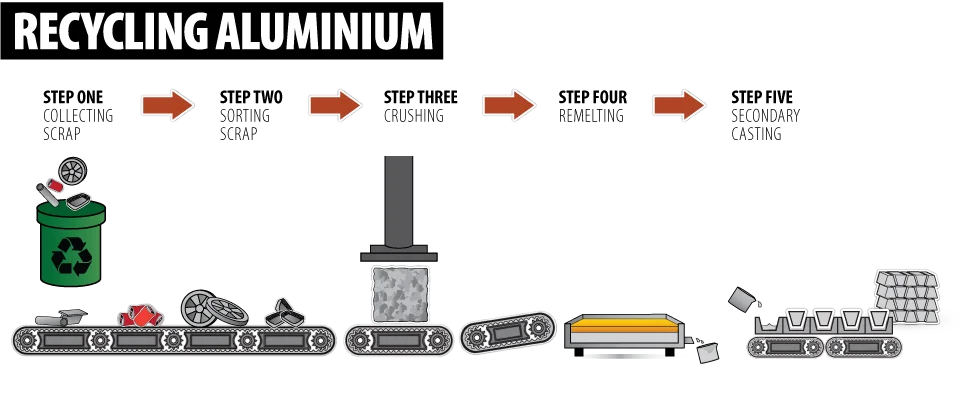
Inert anode technology replaces carbon-based anodes in primary smelting, reducing direct greenhouse gas emissions by 95% compared to conventional Hall-Héroult electrolysis. Current industrial trials for aluminium manufacturing utilize scandium-modified alloys that maintain yield strengths above 500 MPa at temperatures exceeding 300°C. Automated sorting via Laser-Induced Breakdown Spectroscopy (LIBS) now achieves 99% accuracy in separating wrought scrap from cast alloys. These systems reduce remelting energy consumption by 30% while enabling the use of 100% recycled feedstock in automotive sheet production, significantly improving material efficiency across global industrial supply chains.
Inert anode technology transforms primary smelting by replacing consumable carbon blocks with non-consumable, chemically stable ceramic-metallic materials. This change generates pure oxygen as a byproduct rather than carbon dioxide, fundamentally altering the electrolytic reaction.
Pilot programs launched in 2024 operating clusters of 50 cells demonstrated that these anodes maintain electrolyte stability under high current densities. Maintaining cell temperatures between 940°C and 960°C prevents electrolyte degradation while extending anode lifespan by several years.
"Inert anodes allow for a closed-loop electrolysis environment, which reduces the potential for localized chemical imbalances in the potline and stabilizes the overall energy demand per ton of metal produced."
Stability in the electrolysis phase facilitates the development of advanced alloys that incorporate rare-earth elements like scandium. Manufacturers integrate these elements to improve thermal resistance, allowing components to function reliably at temperatures reaching 300°C.
Scandium additions, typically ranging from 0.1% to 0.5% by weight, enable the grain structure to resist coarsening during heat treatment. Recent tensile testing of 200 samples confirmed that these alloys exhibit a 15% improvement in fatigue life compared to standard 7xxx series materials.
These enhanced material properties support additive manufacturing techniques such as laser powder bed fusion, which are incompatible with traditional high-silicon alloys. Precise control over zirconium additives refines the solidification process, preventing hot tearing in complex structural members.
| Property | Standard 7xxx Alloy | Sc-Modified Alloy |
| Yield Strength (MPa) | 480 | 540 |
| Fatigue Life (Cycles) | 1,000,000 | 1,200,000 |
| Thermal Stability (°C) | 150 | 300 |
Solidification control during additive manufacturing requires digital modeling to predict thermal stress, which transitions into the sophisticated recycling sorting systems used to manage scrap feedstock. Automated sorting lines now use Laser-Induced Breakdown Spectroscopy to analyze metallic components in real-time.
The system scans 50 items per second with 99% compositional accuracy, separating wrought scrap from high-impurity cast alloys effectively. This precision allows processors to maintain high purity levels without needing to add significant amounts of primary metal during the casting cycle.
"Laser-based sorting minimizes the introduction of unwanted alloying elements into the recycling stream, which preserves the intrinsic mechanical properties of the recovered material for subsequent industrial use."
Recycling feedstock requires 95% less energy than primary smelting, creating an economic justification for high-tech sorting infrastructure. Facilities in 2025 reported that utilizing these automated lines reduced fuel consumption in remelting furnaces by 12% across total output.
During additive fabrication, laser melting creates cooling rates of $10^6$ K/s, forcing the alloy to adopt a fine dendritic structure. This rapid transition freezes the solute atoms in the matrix, strengthening the component without secondary hardening treatments.
High-resolution X-ray computed tomography monitors these internal structures, checking 100% of flight-critical parts for porosity or inclusions. Modeling software predicts potential stress concentrations by correlating print parameters with material cooling curves.
If the laser power fluctuates by more than 2%, the system automatically corrects the dwell time to maintain uniform melt pool depth. Automated calibration reduces the occurrence of keyhole defects by 40% during the fabrication of thin-walled structural members.
Furnace efficiency gains depend on the precise management of thermal gradients, which leads to the integration of digital twin simulations in the broader scope of operations. Engineers use real-time sensor data, sampling at 100 Hz, to adjust heating parameters instantaneously.
Adaptive control algorithms detect deviations in metal viscosity or temperature before they cause casting defects. These adjustments ensure that final metal densities exceed 99.8% of the theoretical maximum, providing consistent structural quality for high-stress applications.
The thermodynamic efficiency of remelting depends on preheating technologies that capture exhaust heat from the furnace stacks. Preheating scrap loads to 400°C before charging the bath increases the effective melt rate by 20% compared to traditional cold-charging.
Reducing the temperature delta between the charge and the melt bath minimizes the thermal shock experienced by furnace refractory linings. Longer lining life reduces maintenance downtime, contributing to an overall increase in furnace availability by approximately 8% annually.
Combining adaptive laser control with intelligent sorting creates a manufacturing environment where material performance aligns with structural requirements. Every mechanical event, from the initial melt to the final cooling phase, contributes to the final surface integrity and metallurgical properties.